Tactile Measurement: A Detailed Overview
- Tactile Measurement is Proven but Increasingly Limited in Modern Manufacturing
- Optical metrology captures surfaces contactlessly, quickly, and with high resolution.
- GBS metrology GmbH offers a wide range of optical solutions with the smartWLI series.
- Modern measurement systems enable automation and inline integration.
- Companies benefit from increased efficiency and process reliability.
Tactile measurement has been an established method for decades to capture surface structures and geometries in industry and research. The method is known for its reliability and standardization but is increasingly limited as modern technologies provide new possibilities.
Especially in the inspection of micro-geometries and surface roughness, conventional tactile methods reach their limits. The following article explains the fundamentals of tactile metrology, highlights its disadvantages, and compares them with the advantages of modern optical metrology as offered by GBS metrology GmbH.
Measurement Methods in Transition
Tactile measurement systems operate on the principle of mechanical scanning. A probe, often made of carbide or diamond, moves across the surface of a workpiece to record height variations and surface structures.
This method has gained recognition primarily for its compliance with standards and the ability to trace measurements using certified reference standards. In industrial manufacturing and quality assurance, tactile measurement long served as the standard, particularly for surface roughness assessment and the inspection of workpiece geometries.
Function and Procedure of Tactile Measurements
Tactile measurement uses a physically moved probe that is guided along a predefined path over the surface to be inspected. The system records height deviations with high precision. The measurement data are evaluated electronically and provide values such as Ra, Rz, or Rmax.
The results serve as a basis for compliance with production standards and quality guidelines. Measurements are usually taken at discrete points or along defined lines, achieving high repeatability. Standards such as ISO EN 21920 regulate the execution and evaluation of the measurement results.
-
Tactile measurement involves physical contact between the probe and the surface.
-
The method provides standardized, traceable measurement results.
-
Data are typically collected point-by-point or along lines with high repeatability.
Weaknesses and Limitations of Tactile Measurement Methods
Despite their widespread use, tactile measurement systems reach their limits in modern manufacturing environments. Mechanical contact can damage sensitive or soft surfaces.
Measurements are time-consuming, as the probe must trace each contour individually. Automated and inline-capable processes can only be implemented to a limited extent. For very small structures and complex geometries, measurement accuracy is limited, especially if the probe tip radius is large relative to the features being measured. Additionally, this method is not suitable for rapid inspection of large quantities or for delicate, high-gloss surfaces.
Measurement Methods Compared: Tactile vs. Optical
The differences between tactile and optical metrology lie in the measurement principle and technical capabilities. While tactile methods involve direct contact with the surface, optical metrology operates without contact, using light to capture surface structures.
Optical technologies are faster, cover larger areas, and provide high-resolution 3D data. Tactile measurement remains relevant where traceability to traditional standards is essential but is increasingly complemented or replaced by optical systems.
-
Optical metrology is contactless and suitable for sensitive surfaces
-
Enables fast, large-area capture of 3D data
-
Tactile measurement remains competitive only in specific cases
New Standards: Why Optical Metrology Shapes the Future
Optical metrology is establishing itself as the leading technology for precise surface measurement. Its contactless approach prevents damage and enables measurements on sensitive or complex structures. Modern systems achieve high measurement speeds and, thanks to GPGPU-accelerated data processing, are suitable for automated and inline applications.
The resolution reaches the nanometer range, allowing even the finest structures and surface roughness to be reliably captured. Optical metrology provides the foundation to optimize processes and consistently maintain quality standards.
GBS metrology GmbH: Optical Metrology at the Highest Level
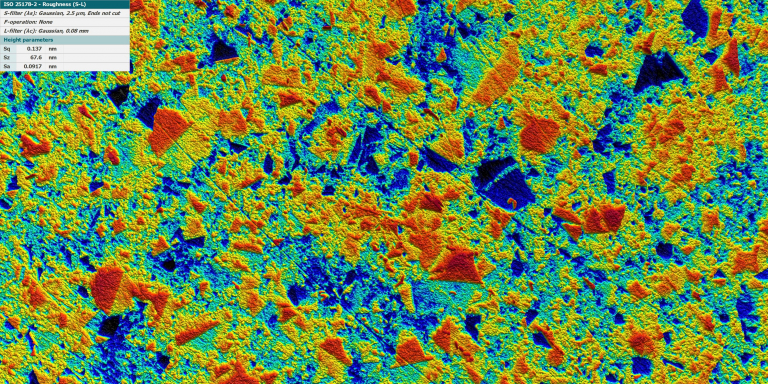
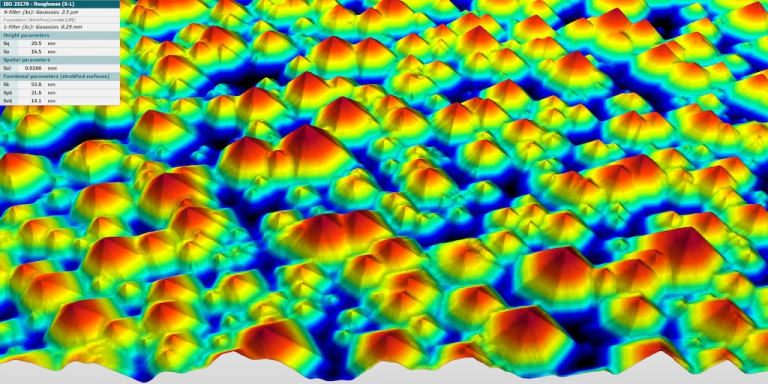
GBS metrology GmbH relies on white-light interferometry and develops highly precise optical 3D sensors and profilometers. smartWLI technology stands for fast, high-resolution measurements, even on challenging surfaces.
Systems such as the smartWLI firebolt8 or nimbus8 combine very high measurement speed with extremely high resolution. By using GPGPU technology, large volumes of data are processed in real time.
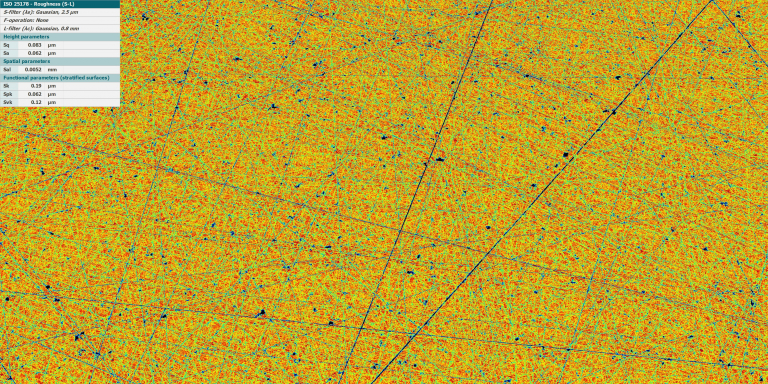
The sensors capture height differences, deliver reliable roughness values, and can be flexibly configured for a wide range of measurement tasks. The devices are easy to integrate into production lines and, thanks to the SDK, provide full access for automation purposes.
Practical Application: From Tactile to Optical – Increasing Efficiency in the Measurement Process
A typical practical example illustrates the transition from tactile to optical measurement systems. In the production of precision components, the use of optical 3D sensors led to a significant reduction in measurement times.
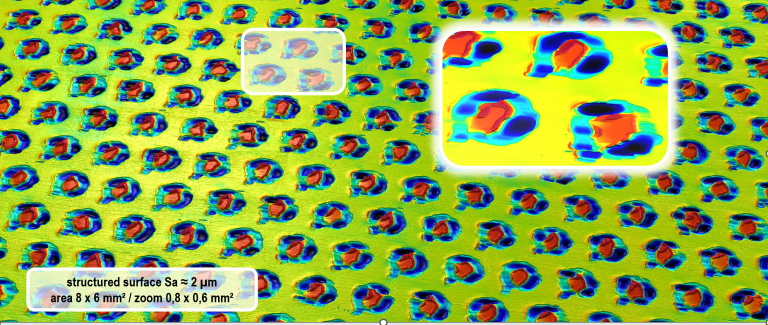
Contactless measurement also made it possible to inspect sensitive, polished surfaces without any risk of damage. The evaluation of surface parameters such as roughness or form was performed automatically and consistently. Companies that switch to optical metrology benefit from greater flexibility and increased process reliability.
Has tactile measurement become obsolete?
Tactile measurement remains relevant for certain applications, but it is increasingly being supplemented or replaced by optical technologies. Optical metrology from GBS metrology GmbH offers a future-proof solution for precise, fast, and contactless surface measurement.
The shift toward fully automated and inline-capable systems opens up new possibilities in quality assurance and process control. Companies that modernize their metrology secure efficiency advantages and a high level of measurement quality.
Switch to modern surface metrology now

Take advantage of the benefits of optical metrology from GBS metrology GmbH for your production or research. Discover precise, fast, and contactless solutions tailored to your individual measurement tasks. Benefit from innovative technology, high flexibility, and comprehensive expert consulting.
FAQ
Tactile measurement refers to the mechanical acquisition of surface structures using a probe. The method is well established, but often no longer sufficient for modern requirements.
The process is time-consuming, can damage surfaces, and is only limitedly suitable for automation.
Optical methods are advantageous for sensitive, complex, and large-area surfaces, as well as when high speed and automation are required.
Discover more news about GBS
As a top-class white-light interferometer, the smartWLI nimbus8 naturally offers extremely high height resolution. With regard to lateral…
Read more
Powerful hardware ensures fast measurements — that is obvious. In the smartWLI series, however, the available computing power…
Read more
Optical profilometry has advanced rapidly in recent years. While it was once primarily evaluated by how well it…
Read more