smartWLI nimbus8: 8 Million Measurement Points with Every Measurement
The most important selection criteria for a high-performance optical profilometer certainly include:
- vertical resolution
- lateral resolution
- measurement area
- measurement speed
As a top-class white-light interferometer, the smartWLI nimbus8 naturally offers extremely high height resolution. With regard to lateral resolution and measurement area, however, there is always a compromise: if an application requires higher lateral resolution, an objective with higher magnification must be used. This, in turn, reduces the measurement area.
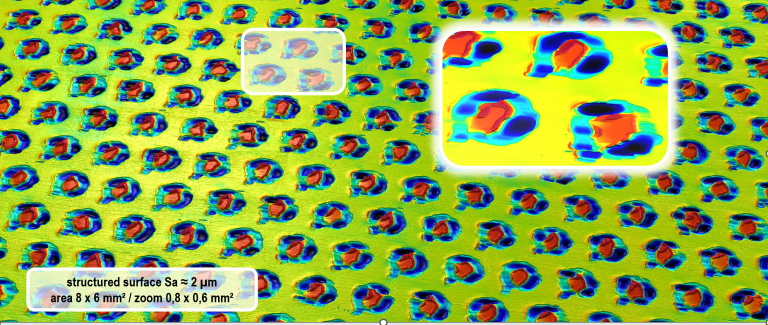
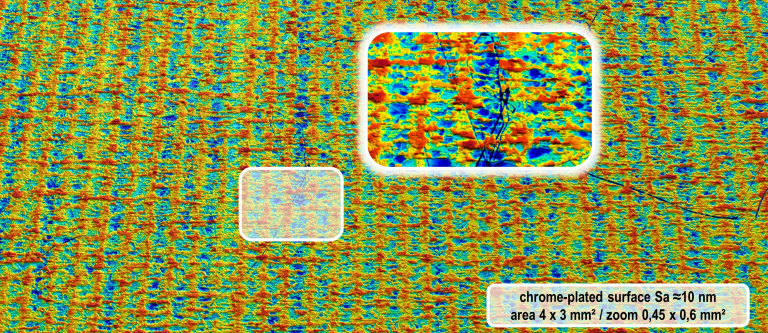
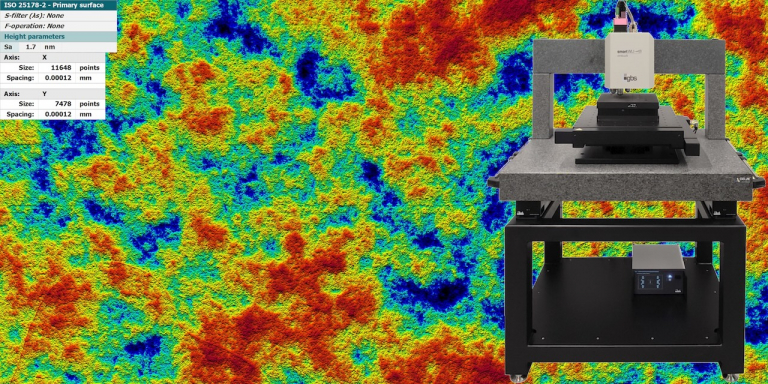
This physical relationship also applies to the smartWLI nimbus8, which uses four objectives with different magnifications. However, one decisive advantage is its ability to capture 8 million measurement points in a single measurement. While other sensors often cannot even operate 5-megapixel cameras at full resolution, the smartWLI nimbus8 combines a high-speed camera with real-time image data processing on a powerful graphics card.
Thanks to real-time image processing, there are no memory capacity issues even at full resolution and with a large measurement range in the z-direction. The individual images do not need to be stored in the first place.
High Measurement Speed at Full Resolution
The video shows how a larger area is captured with several individual measurements within just a few seconds. On the left, the progress of the individual measurements within the marked measurement area can be seen; on the right, the data acquisition speed is displayed.
One important detail should not be overlooked: the smartSTITCH software combines all individual measurements seamlessly before the data is transferred to the MountainsMap® analysis software. In contrast to stitching performed in MountainsMap®, smartSTITCH applies not only height corrections in the overlapping areas, but also angular corrections. As a result, the limitations of mechanical positioning systems are completely eliminated.
Thanks to the 10 GigE interface, the camera is able to acquire images at 160 fps in full resolution. This enables individual measurements to be performed at one-second intervals. Especially when larger areas need to be captured with many individual measurements, the high camera resolution significantly reduces the number of positioning steps required.
Uncompromising Roughness Measurements
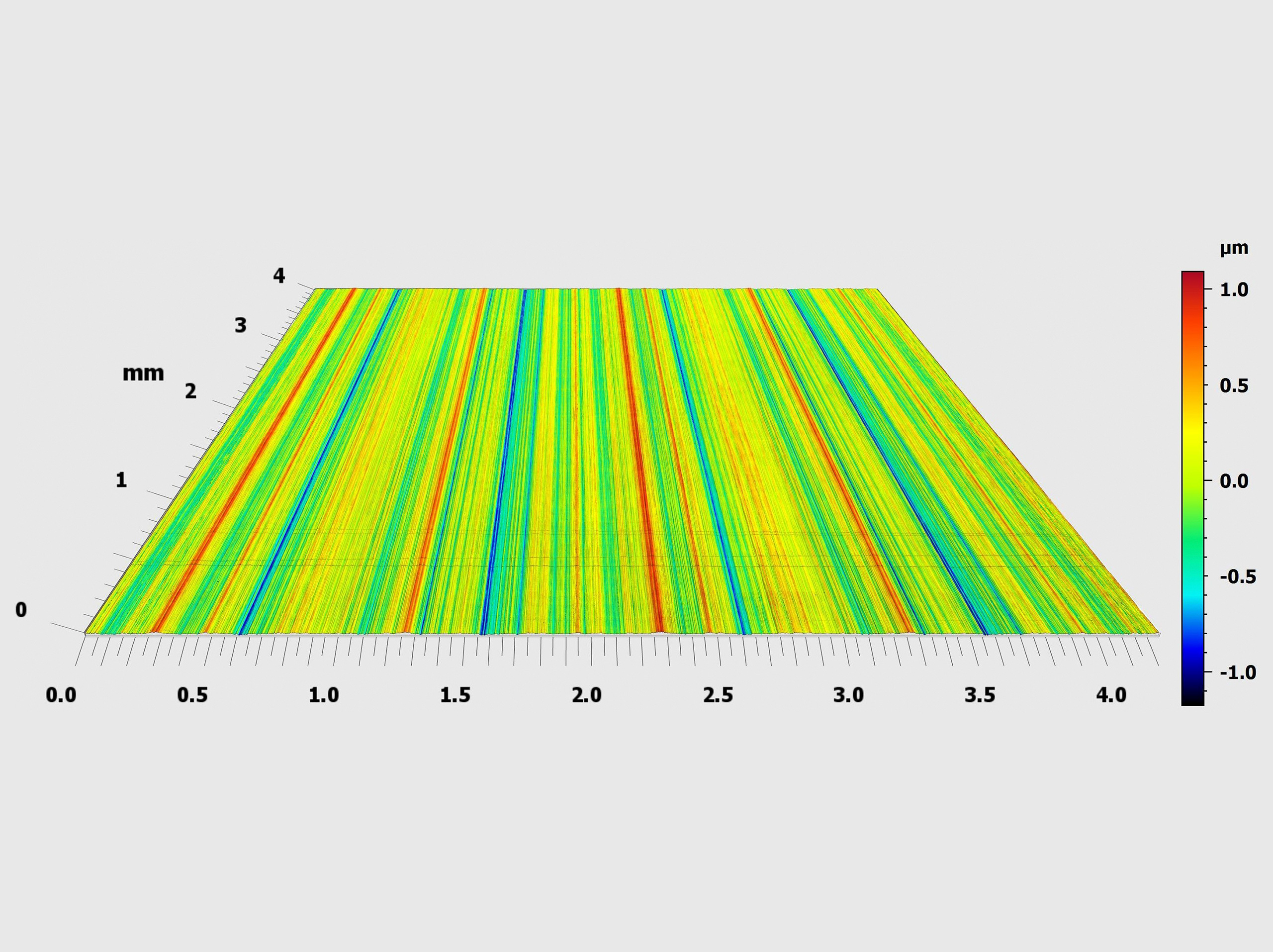
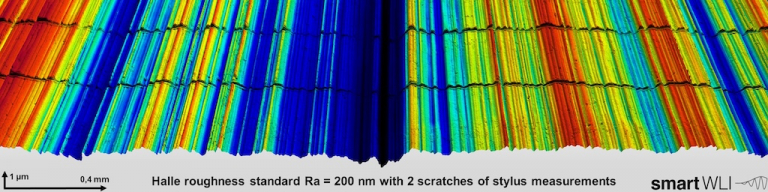
In order for a measuring system to be used in a measuring room as a reference device for other systems, it is important that all requirements of ISO 21920 are fulfilled.
For the most important setting class, Sc3, this means the following measurement requirements:
- evaluation length le: 4 mm
- maximum sampling interval: 0.5 µm
The following filters are then used for evaluation:
- cut-off wavelength λc: 0.8 mm
- cut-off wavelength λs: 2.5 µm
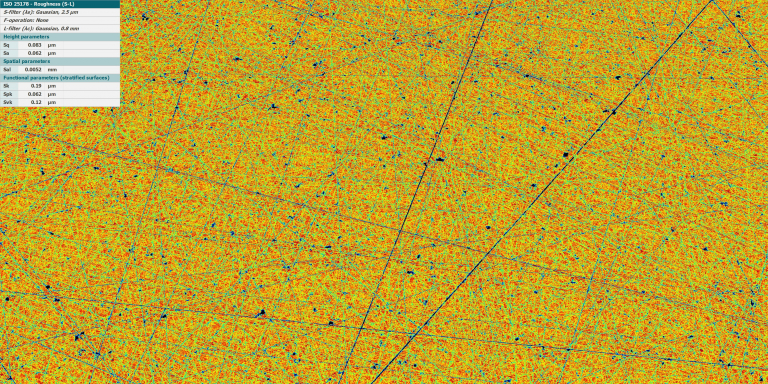
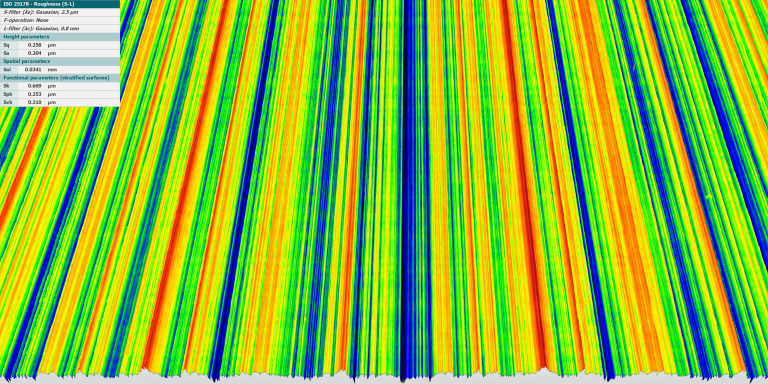
For 3D roughness measurements according to ISO 25178-3, section 4.2.1.1, the evaluation area for an S-F surface should be square. In principle, there is flexibility in the application-specific specification of measurement field sizes and filters. However, if the decades of experience gained from tactile roughness measurement are to be applied, it is necessary to capture an area of 4 × 4 mm² with a measurement point spacing of 0.5 µm.
Many optical 3D measuring instruments fail at this task. Some do not have this capability at all, while others can perform such a measurement, which requires the acquisition of 64 million measurement points, only with a very high time expenditure.
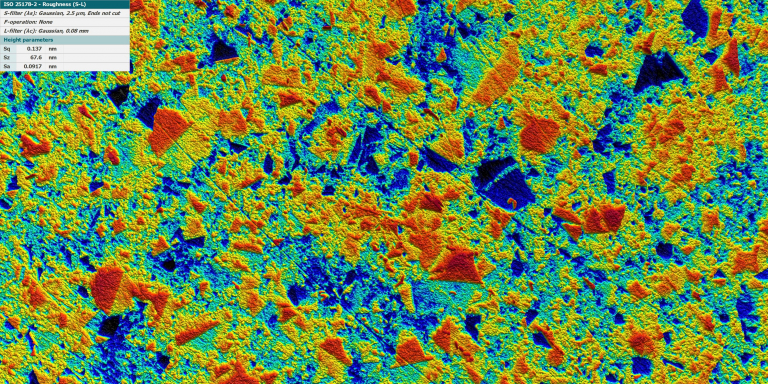
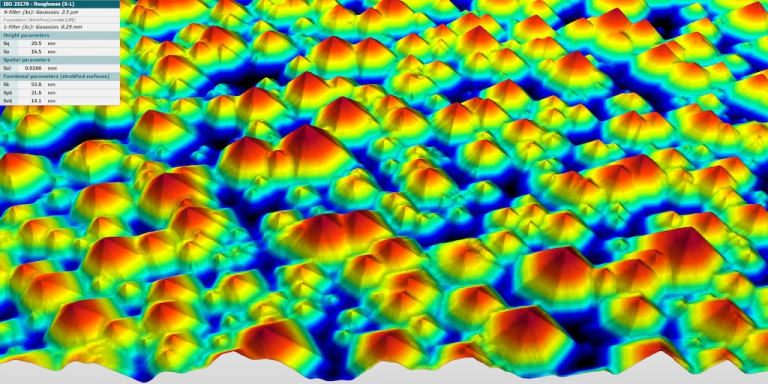
With the smartWLI nimbus8, a Nikon 10x interference objective can be used for this purpose. The measurement, including stitching and evaluation, takes only a few seconds and provides significantly more data than a simple profile measurement.
Download
Download the full report “smartWLI nimbus8: 8 Million Measurement Points with Every Measurement” and explore practical examples illustrating these relationships.
Discover more news about GBS
Powerful hardware ensures fast measurements — that is obvious. In the smartWLI series, however, the available computing power…
Read more
Optical profilometry has advanced rapidly in recent years. While it was once primarily evaluated by how well it…
Read more