Surface Roughness: Modern Measurement Techniques and Applications
- Surface roughness describes fine irregularities on technical surfaces.
- Standardized parameters such as Ra and Rz allow for objective evaluation.
- Optical measurement techniques provide the highest precision and speed.
- Modern systems like smartWLI are suitable for use in both production and laboratory settings.
- Surface roughness affects the functionality and service life of components.
- Digital solutions and AI optimize process monitoring and data evaluation.
Surface roughness forms a central basis for assessing technical surfaces. In industry, specific requirements exist for the condition of workpieces to ensure functionality, longevity, and assembly capability. Accurate measurement of surface structures is a key pillar of quality assurance across many sectors.
What is meant by surface roughness?
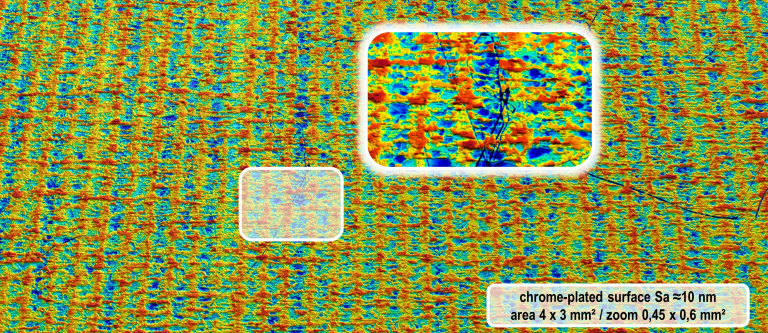
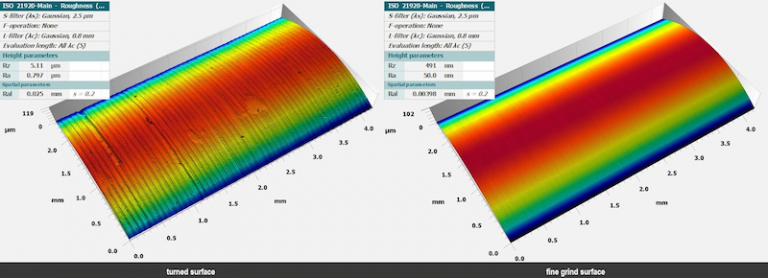
Surface roughness refers to the fine irregularities of a surface that arise during the manufacturing process. It is caused by tool marks, material properties, and processing methods. Unlike waviness or form deviations, surface roughness describes the microstructure of a surface.
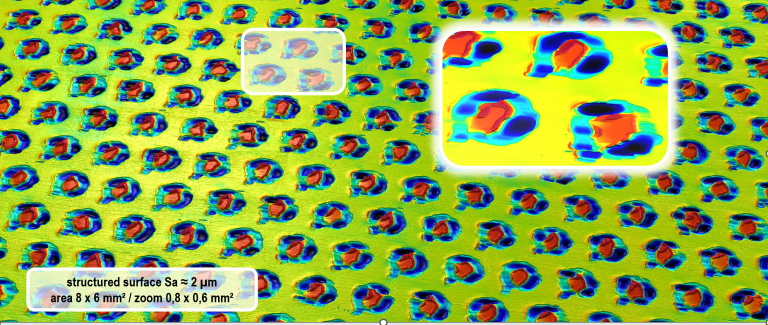
The degree of roughness is directly related to the manufacturing method used, such as turning, milling, or grinding. The resulting structures range from visible scratches to nanometer-scale elevations, significantly impacting the function and quality of components.
-
Surface roughness describes micro- and nanostructures created by manufacturing processes.
-
Differences from waviness and form deviations lie in the scale of the surface structure.
-
Roughness has a major influence on the function and quality of technical components.
Key Parameters and Standards for Characterizing Surface Texture
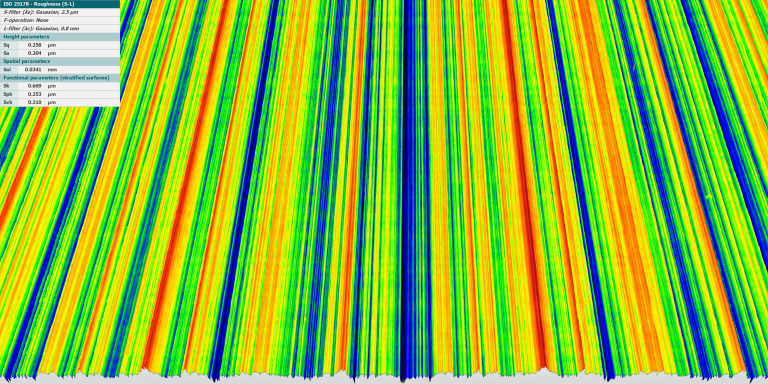
Standardized parameters are used to describe surface roughness. The most commonly used are Ra, Rz, Rmax, Rt, and Rq. Ra represents the arithmetic mean of the height deviations and is internationally recognized. Rz indicates the average height of the largest profile peaks and valleys within a measurement length.
Rmax and Rt specify the maximum height differences of individual measurement areas, while Rq represents the root mean square (RMS) value. Relevant standards such as ISO 21920, ISO 4287, and ISO 25178 define the measurement and evaluation methods. In practice, typical Ra values for ground surfaces range between 0.1 and 2 µm, while polished surfaces can reach values below 5 nm.
Importance of Surface Roughness for Function and Quality
The degree of surface roughness directly affects friction, wear, and lubrication behavior. In the automotive industry, it controls the sealing of engine components and influences oil consumption. In mechanical engineering, it determines the lifespan of bearings and guides.
In medical technology, the microstructure plays a role in the integration of implants, while in electronics, even the smallest irregularities impact the contact quality of solder joints. For coatings as well as adhesive and sealing applications, roughness is a critical factor for adhesion and durability.
Measurement Methods for Determining Surface Roughness
Various methods are available for measuring surface roughness. Tactile systems use a fine diamond tip that scans the surface and records height profiles. This method delivers reproducible values but reaches its limits on very smooth or sensitive surfaces.
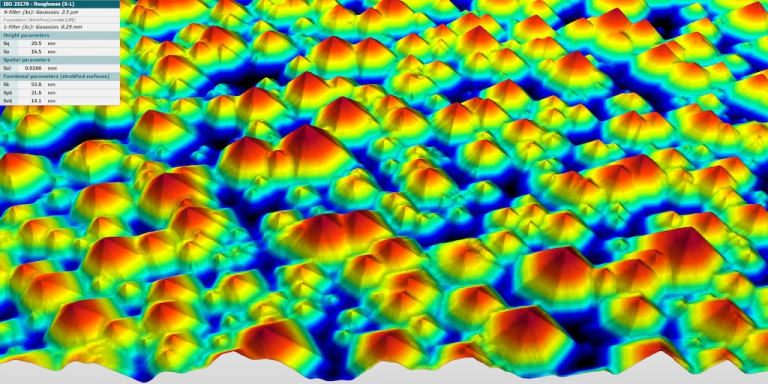
Optical measurement methods offer significant advantages. Systems such as coherence scanning interferometry enable contactless, three-dimensional capture of even the finest structures. Compared to tactile methods, optical techniques achieve higher lateral and vertical resolution.
They are faster, cover larger areas in less time, and provide reliable results even on steep flanks or transparent layers. Modern optical sensors are used both in the laboratory and inline in production, ensuring consistent quality at high speed.
Key advantages of optical measurement methods:
-
Enable contactless, three-dimensional measurements.
-
Provide higher lateral and vertical resolution compared to tactile methods.
-
Faster data acquisition and larger area coverage.
-
Suitable for sensitive, steep, or transparent surfaces.
Modern Solutions from GBS Metrology for Roughness Measurement
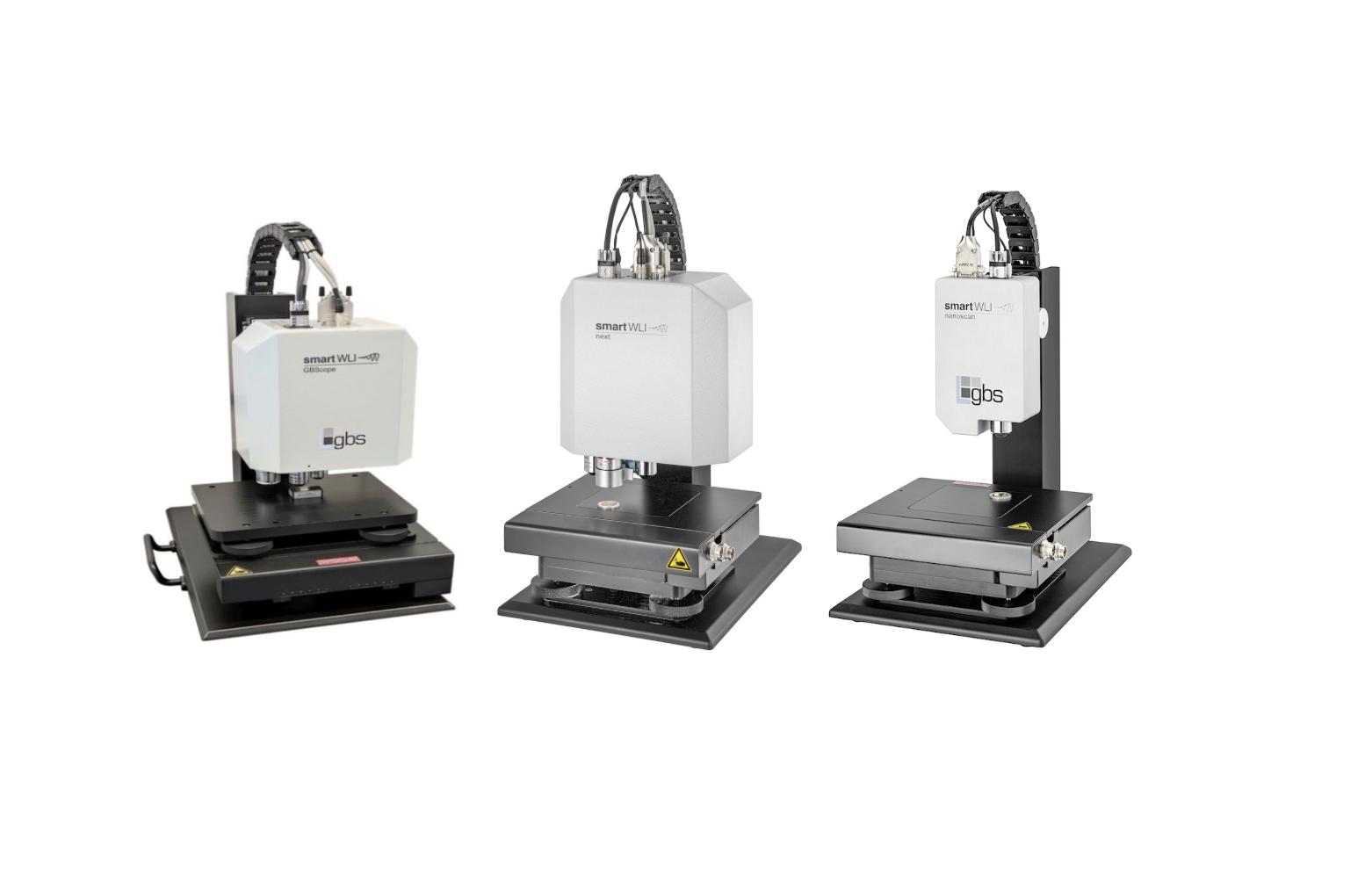
The sensors and measurement systems from GBS metrology are based on coherence scanning interferometry. The smartWLI series combines measurement speed with high resolution and a wide acceptance angle. By utilizing GPGPU technology, image data is processed massively in parallel, enabling very short measurement times.
The systems are compact and can be directly integrated into production lines. Advanced Quality Control (AQC) improves the evaluation of measurement points and minimizes outliers.
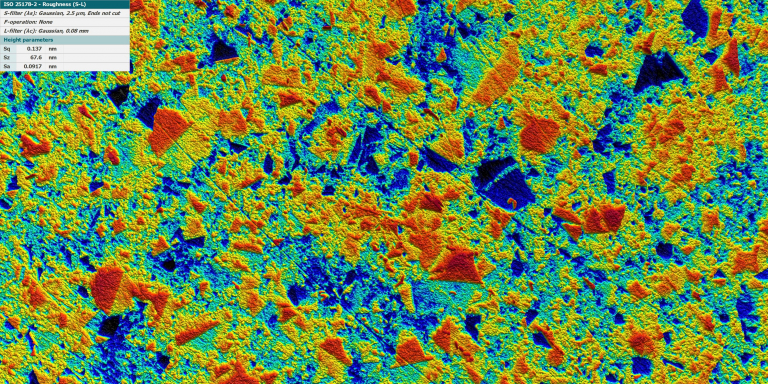
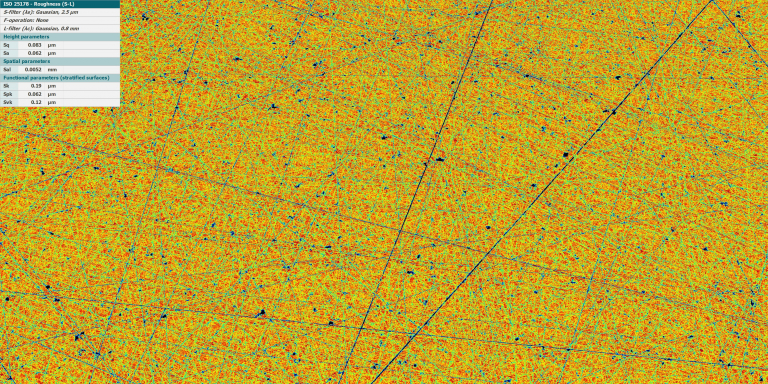
Typical applications range from the analysis of polished wafers, cylinder bores, and cutting edges to the evaluation of additively manufactured surfaces. Integration into production lines is facilitated via an SDK, allowing flexible adaptation to various measurement tasks.
Challenges and Sources of Error in Surface Roughness Measurement
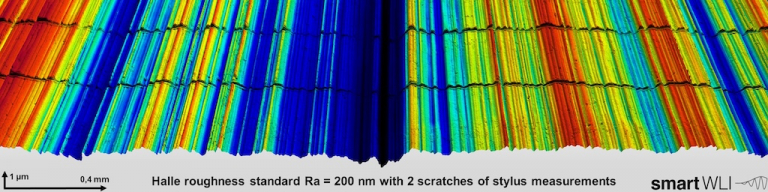
When determining surface roughness, various sources of error can arise. The selection and calibration of measurement standards, such as MAHR MSS3 or HALLE KNT 4058-01, ensure traceability and comparability of results.
Environmental conditions, including temperature and vibrations, influence measurement outcomes, making suitable equipment and measurement environments essential. The choice of an appropriate measurement strategy and parameters determines the meaningfulness of the results. Interpretation of roughness values should always consider the manufacturing conditions and the function of the component.
Advancements in Surface Measurement
Digitalization is shaping the development of surface measurement. Automated inline systems monitor roughness directly during production. Intelligent software solutions analyze large volumes of data and support process optimization, while artificial intelligence enhances the interpretation of measurement results.
The networking of measurement systems enables continuous monitoring of complex manufacturing processes. Development is moving toward faster, more flexible, and more robust measurement methods that meet the increasing quality demands in industry.
Measure surface roughness precisely with GBS technology now.
Obtain reliable and objective surface roughness measurements with the innovative optical systems from GBS metrology. Our smartWLI series delivers maximum resolution, speed, and flexibility for both laboratory and production environments. Benefit from our expertise with personalized consultation or a free test measurement. Experience how modern metrology enhances your quality control and process reliability. Contact us today to find the optimal solution for your applications!
Discover more news about GBS
Optical profilometry has advanced rapidly in recent years. While it was once primarily evaluated by how well it…
Read more