Surface Analysis with System: Detailed Roughness Measurement
- Roughness Measurement Ensures Component Function and Quality
- Different methods: tactile and optical, depending on the application
- Modern systems enable fast, precise, and automated measurements
- Standards and calibration ensure reliable results
- Practical applications across numerous industries, from automotive to medical technology
Roughness measurement is a fundamental part of quality control in many industries. From automotive manufacturing to medical technology, the surface condition of components is crucial for ensuring their function and longevity. The following provides an overview of roughness measurement, from basic principles to modern measurement systems.
Fundamentals of Surface Structure
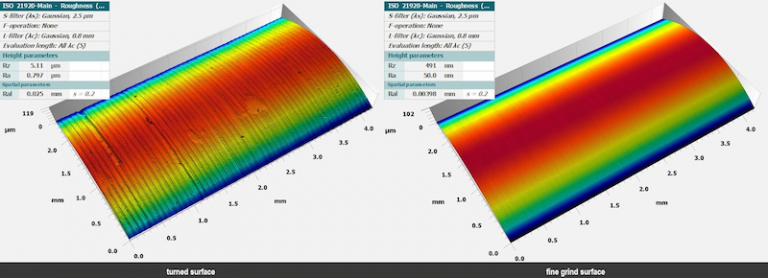
The analysis of surface structures begins with distinguishing between roughness and waviness. Roughness describes the microstructure of a surface, while waviness refers to macroscopic structures. Both parameters influence key properties such as friction, adhesion, and sealing. Standards like ISO 21920, ISO 4287, and ISO 25178 define the parameters and ensure comparability in measurement practice.
-
Roughness and waviness describe different structural levels of a surface.
-
International standards establish comparability and measurement norms.
Functional Significance of Surface Roughness
In technical applications, a defined surface roughness is required to achieve specific properties. The target roughness is chosen based on the area of application: low roughness is required for sliding bearings and cylinder running surfaces, while higher roughness may be necessary for adhesive coatings or seals. The specified roughness values are documented in drawings and technical documentation.
The economic significance lies in balancing manufacturing effort with the required surface quality, as achieving lower roughness increases production effort.
Key parameters and their significance
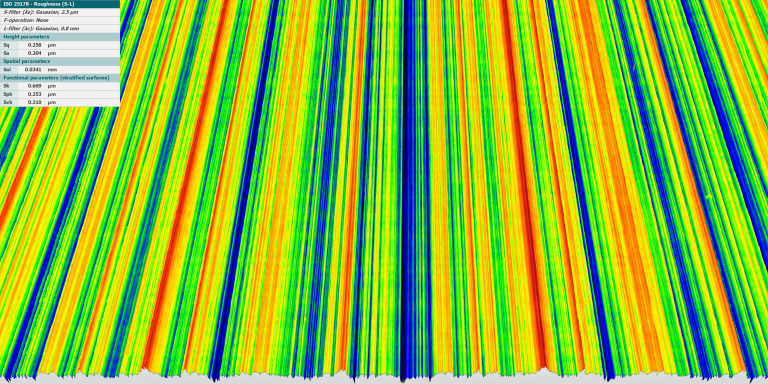
In the context of surface roughness measurement, parameters such as Ra, Rz, and Rmr play a crucial role. Ra represents the arithmetic mean of the profile deviations, Rz indicates the maximum height of the profile irregularities, and Rmr denotes the material-bearing ratio.
ISO 21920-2:2021 provides an extended set of parameters to specifically characterize surface structures. The selection of the appropriate parameters is guided by the functional requirements of the component.
Comparison of Surface Measurement Methods
Tactile methods use a diamond tip to scan the surface. This approach is robust and proven for many applications but reaches its limits on very smooth or delicate surfaces.
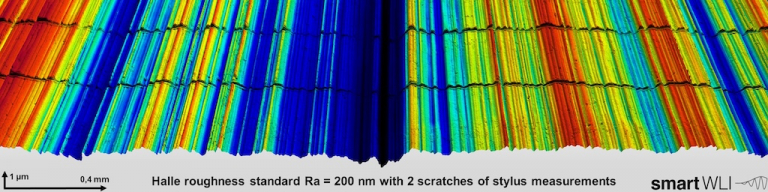
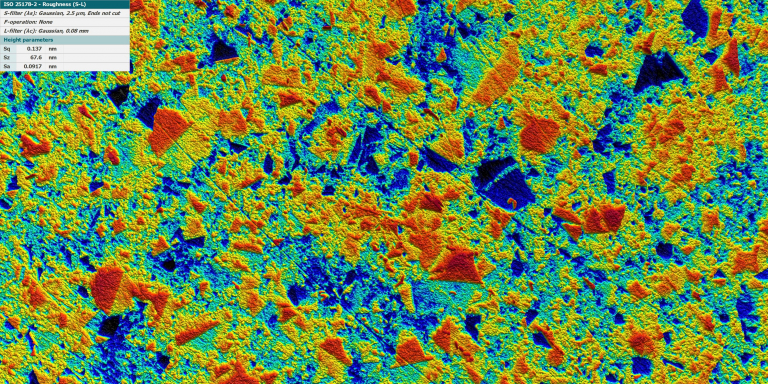
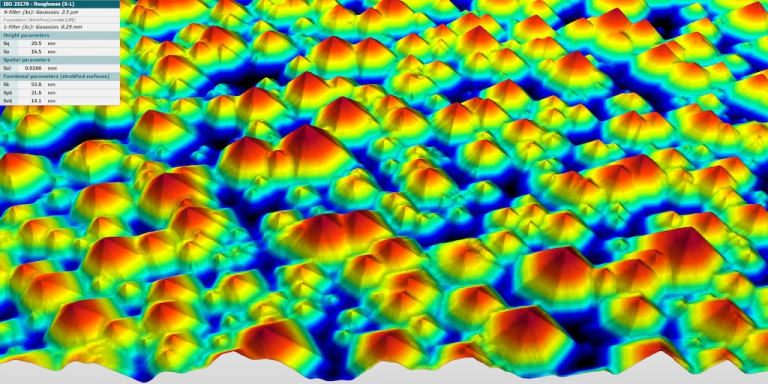
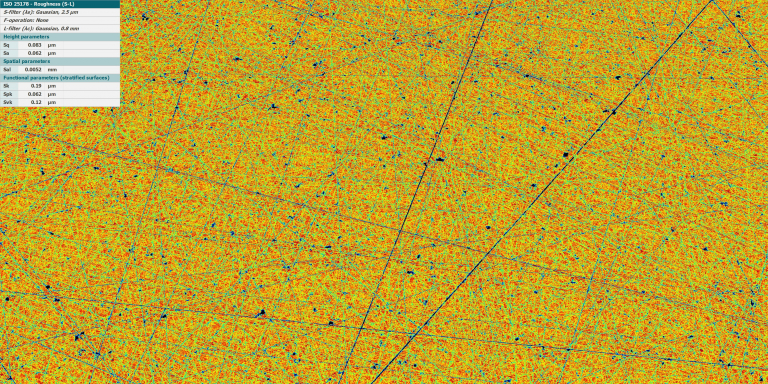
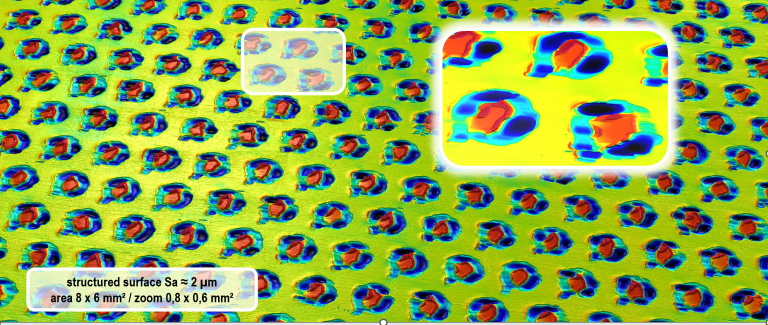
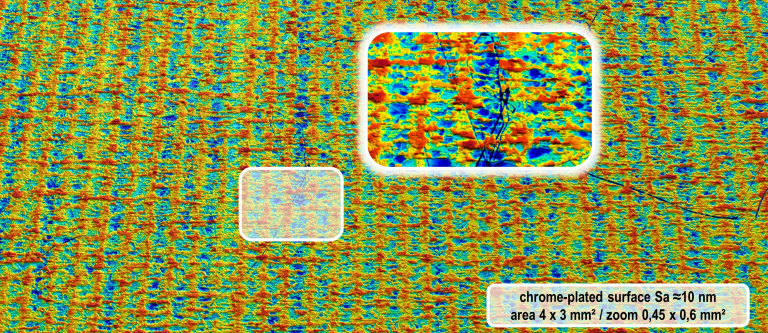
Optical methods, such as white-light interferometry or confocal technology, enable contactless measurements and offer advantages for sensitive or highly polished surfaces. In addition, optical systems provide 3D data and allow for faster overall scanning. The choice of method should be based on the surface characteristics and the intended application.
Tactile measurement: robust, established for structured surfaces.
Optical measurement: contactless, suitable for delicate or fine structures, provides 3D data, allows fast acquisition.
Selection of the Appropriate Measurement Method
When choosing the right measurement method, the surface characteristics, required precision, and production context are decisive. Tactile systems are suitable for robust, structured surfaces, whereas optical systems excel on sensitive or finely finished surfaces. In automated manufacturing processes and for high-volume production, optical methods are increasingly gaining importance.
Calibration, Traceability, and Quality Assurance
Ensuring measurement accuracy is achieved through the use of certified roughness standards such as MAHR MSS3 or HALLE KNT. Traceability of measurement results to international standards is a prerequisite for reliable quality assurance. Regular calibration of the measurement systems and documentation of measurement uncertainty ensure the validity and reliability of the results.
Evaluation and Interpretation of Measurement Results
After measurement, the surface data are analyzed using specialized software. Programs such as MountainsMap® offer extensive options for analyzing and visualizing the measurement data. Sources of error can be minimized through proper sample preparation and adherence to standards. The interpretation of the measurement results depends on the intended application and the specific requirements for the surface.
Practical Examples and Case Studies
The application of roughness measurement spans the automotive industry, medical technology, and mechanical engineering. In automotive manufacturing, for example, cylinder running surfaces are checked for suitability, while in medical technology, implants are examined for the desired surface structure.
In the field of additive manufacturing, the surface quality of 3D-printed components can be reliably determined. Challenges often lie in selecting the appropriate system and integrating it into existing production processes.
Future Trends and Innovations
The development of roughness measurement is moving toward digitization and automation. Integrating measurement systems with production processes enables continuous monitoring of surface quality. Artificial intelligence supports the analysis of large data sets and contributes to the optimization of manufacturing workflows. Inline measurement is increasingly becoming the standard in industrial quality assurance.
Modern Optical Solutions from GBS
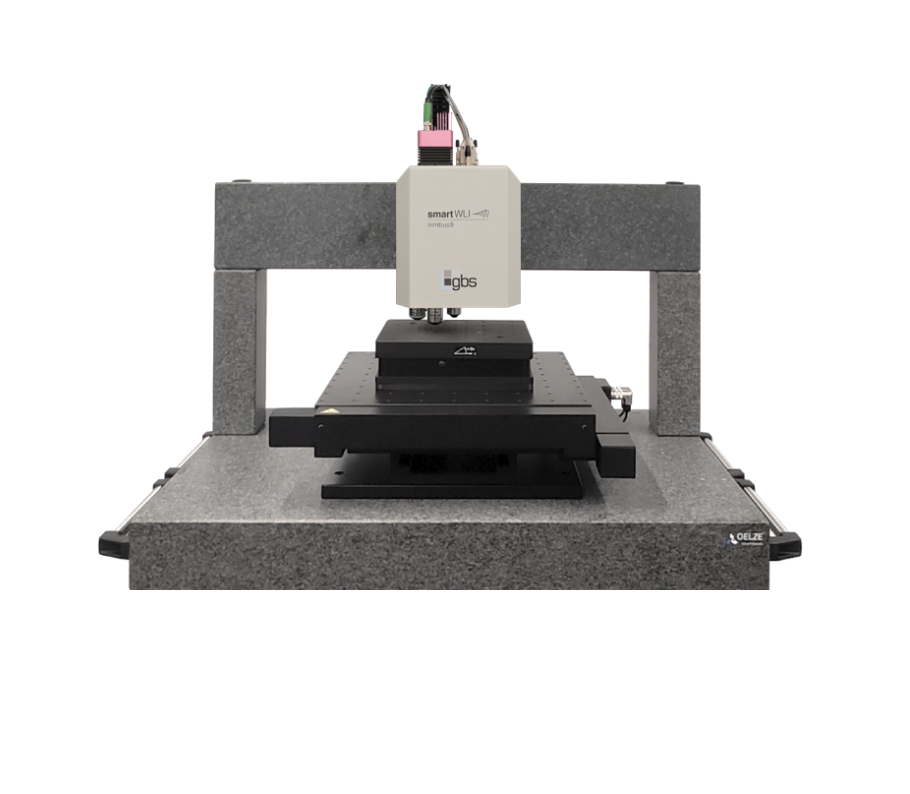
GBS offers modern solutions for roughness measurement based on optical technology. The smartWLI system uses white-light interferometry and GPU-based data processing to enable high-speed, high-precision measurements.
The systems can be used in laboratory environments, production, and for inline inspections. By combining innovative technology with flexible integration, these measurement systems are suitable for a wide range of applications.
FAQ
Roughness is measured either tactilely with a diamond stylus or optically using light interferometry or confocal techniques. The choice of method depends on the surface structure and the required level of precision.
Roughness measurement is indispensable in the automotive industry, mechanical engineering, medical technology, as well as in the production of semiconductors and precision components. It is used wherever surface properties are critical for function and durability.
Optical solutions operate without contact and are particularly suitable for sensitive or highly polished surfaces. They allow fast, large-area, and precise measurements with high-quality data.
Discover more news about GBS
Optical profilometry has advanced rapidly in recent years. While it was once primarily evaluated by how well it…
Read more